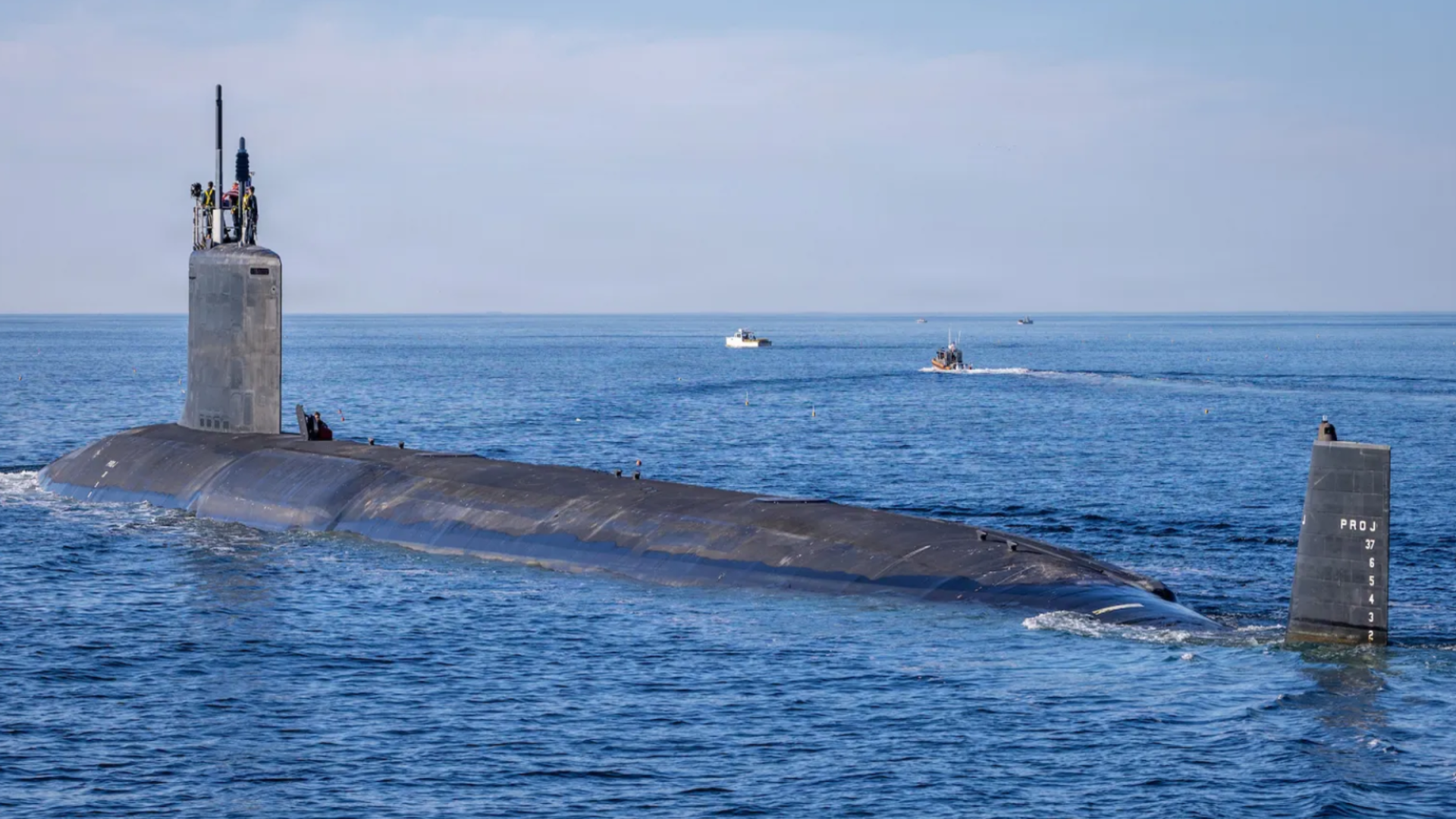
- Britain's nuclear submarine crews are training to fight drones using water
- Fire hoses provide emergency protection when drones breach naval security
- Each Vanguard submarine costs approximately £4 billion despite its basic defences
British sailors are receiving training to repel hostile drones using powerful water jets aboard nuclear submarines stationed at a naval installation in Scotland.
The unconventional approach provides a relatively inexpensive and environmentally friendly defensive option for vessels facing potential aerial attacks while docked or operating above water.
A report from The Sun, the equipment serves as an emergency measure when incoming drones penetrate existing security arrangements around Britain's nuclear deterrent.
High-pressure water jets provide final protection
The Royal Navy has equipped its Vanguard-class submarines with firefighting hoses capable of directing concentrated streams of water toward approaching unmanned aircraft.
These devices feature handheld nozzles with pistol-style controls, allowing sailors to aim pressurised water at airborne threats approaching their vessels.
During an attack, sailors would direct powerful water jets at small and medium-sized FPV drones, attempting to knock them down or divert their flight paths.
The hoses are deployed aboard submarines stationed at HMNB Clyde; the Scottish naval installation responsible for accommodating Britain's nuclear deterrent fleet.
Unlike conventional air defence systems, the hoses cannot detect or automatically track incoming drones.
A naval source acknowledged the limitations of relying on firefighting equipment against airborne threats.
But when in a dire situation, “you have to use what you’ve got,” said an unnamed Royal Navy source.
The Vanguard-class vessels reportedly cost approximately £4 billion each, making their reliance on water-based protection particularly striking.
These submarines carry Trident II D5 ballistic missiles equipped with nuclear warheads, forming the maritime component of Britain's strategic deterrence capability.
Although the hoses provide no conventional anti-aircraft weaponry, they offer crews an immediate means of responding when other defensive measures fail.
Their practical value will depend on whether sailors can deploy them quickly enough against threats that evade existing defences.
Naval base faces potential close-range drone attacks
This arrangement addresses particular vulnerabilities where submarines become more exposed to aerial surveillance and attacks during port operations.
HMNB Clyde occupies a location beside Gare Loch, a relatively confined Scottish waterway measuring approximately one kilometre across at certain points.
Nearby hills, accessible roads and surrounding terrain could allow hostile operators to launch drones without providing defenders sufficient warning.
Such geographical constraints create additional security challenges because relatively short flight distances can significantly reduce the time available for interception.
The Ministry of Defence says military installations rely on several protective measures, including physical barriers, security patrols, surveillance equipment and counter-drone systems.
Officials have also announced £470 million in additional expenditure over four years to improve security across Britain's military facilities and installations.
These security investments become more important as underwater sensors were discovered near routes used by British submarines departing their Scottish naval headquarters.
Those devices were suspected of having possible connections to Russian efforts to monitor submarine movements, although their precise origins remain unconfirmed.