
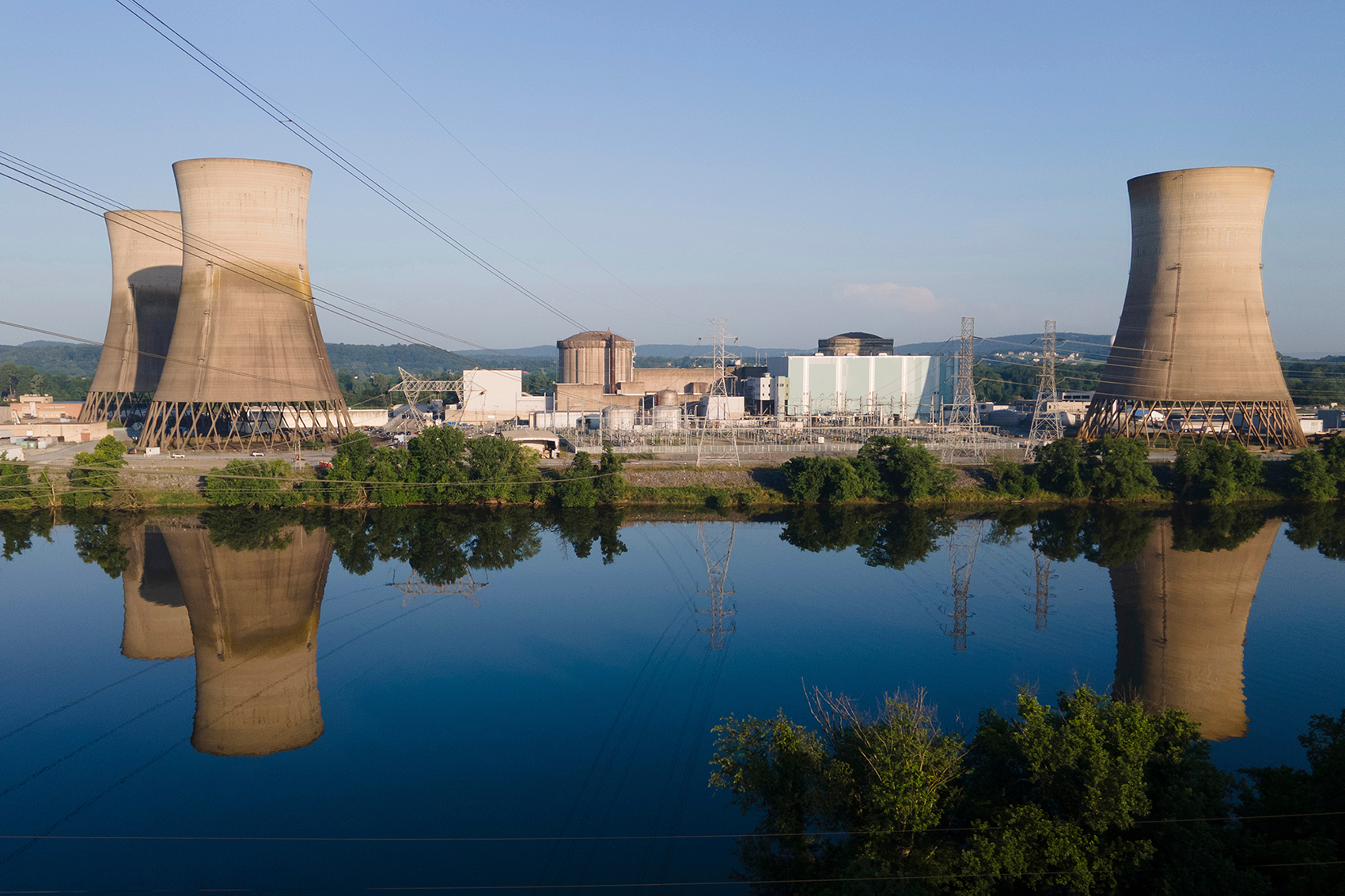
The United States is making an unprecedented attempt to revive three shuttered nuclear plants to meet rising energy demand, including from large-scale data centers.
No commercial nuclear reactor is known to have resumed generating electricity after beginning the decommissioning process that takes one out of service, though some reactors have restarted after long outages.
The Department of Energy is lending as much as $4.4 billion to restart the Palisades Power Plant in Michigan, the Crane Clean Energy Center on Pennsylvania’s Three Mile Island and the Duane Arnold Energy Center in Iowa to restore a combined 2.25 gigawatts of electricity, which can power roughly 2 million homes and businesses. All three of the plants closed before their licenses expired, largely because the electricity they produced was considered too expensive.
Not anymore. Two of the plants have contracts with Big Tech companies that will pay a premium to get large amounts of carbon-free energy for data centers. President Donald Trump’s administration is pushing hard to deploy nuclear power for artificial intelligence and manufacturing. It’s also lending billions of dollars for upgrades to produce more electricity from currently operating nuclear plants.
Restarting a reactor is a fairly quick way to get a lot of electricity, and it’s cheaper than building a new, large reactor, said nuclear engineering expert Todd Allen.
“There’s a demand in the country for more power,” he said. “You have these assets that were previously hooked up. They were previously operable, and you can relatively quickly get them generating electricity again, compared to your other possibilities. For anyone who wants zero carbon, nuclear provides that. For the Trump administration, which really wants nuclear, this fits that story also.”
Allen compared restarting a decommissioned nuclear plant to restarting a car that sat idle for a few years. The driver still needs a valid license and all the parts need to work correctly.
“That’s what they’re trying to do with these nuclear plants, but it’s a much bigger, complicated system,” said Allen, associate dean for research at the University of Michigan’s College of Engineering.
With a nuclear plant, the owner has to bring nuclear workers back and ensure their training is current, make sure everything is working and that maintenance is up to date, ensure they have enough fuel and ask regulators to restore their operating license, he added.
Allen said it’s a lot to track, but it’s relatively straightforward.
Edwin Lyman, at the Union of Concerned Scientists, said the taxpayer money being used should go toward addressing safety risks. For example, most U.S. plants were built between 1970 and 1990 and designed to withstand natural disasters of that era, said Lyman, director of nuclear power safety at UCS. But climate change is making extreme weather events more frequent and severe.
“It’s possible, if they set the right level of safety and spend the necessary funds to meet that, they could restore these plants to operable condition,” he said. “That’s not happening at this point.”
Iowa’s only nuclear facility, Duane Arnold, began operating in 1975. It was scheduled to permanently close in October 2020. Replacing it with cheaper energy sources, including wind, was projected to save Iowa customers $300 million in energy costs. The plant shut down early, in August 2020, when it was damaged during a powerful storm known as a derecho.
NextEra Energy owns Duane Arnold. Looking at its condition, CEO John Ketchum said company officials “felt really good about the ability to bring it back.”


